


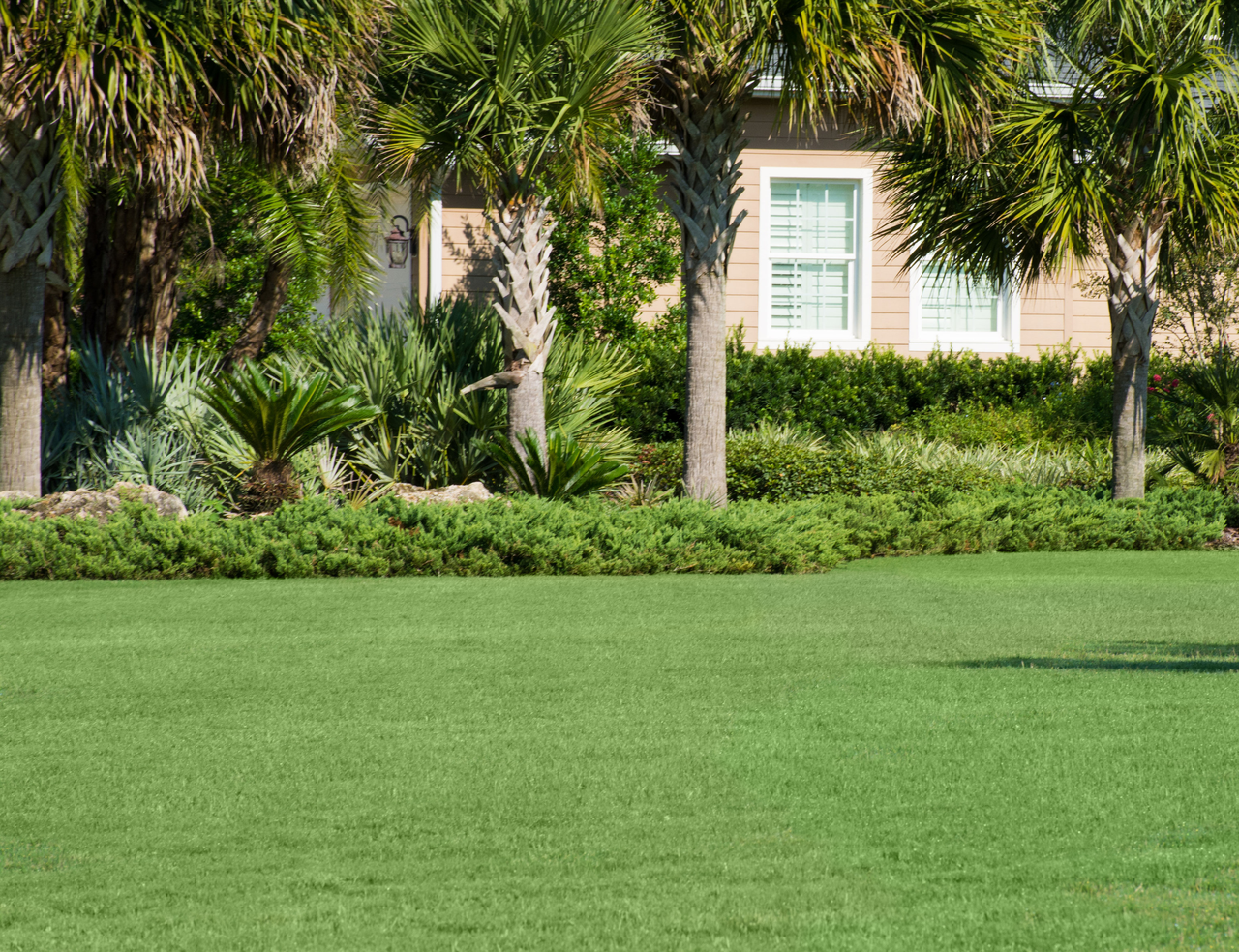
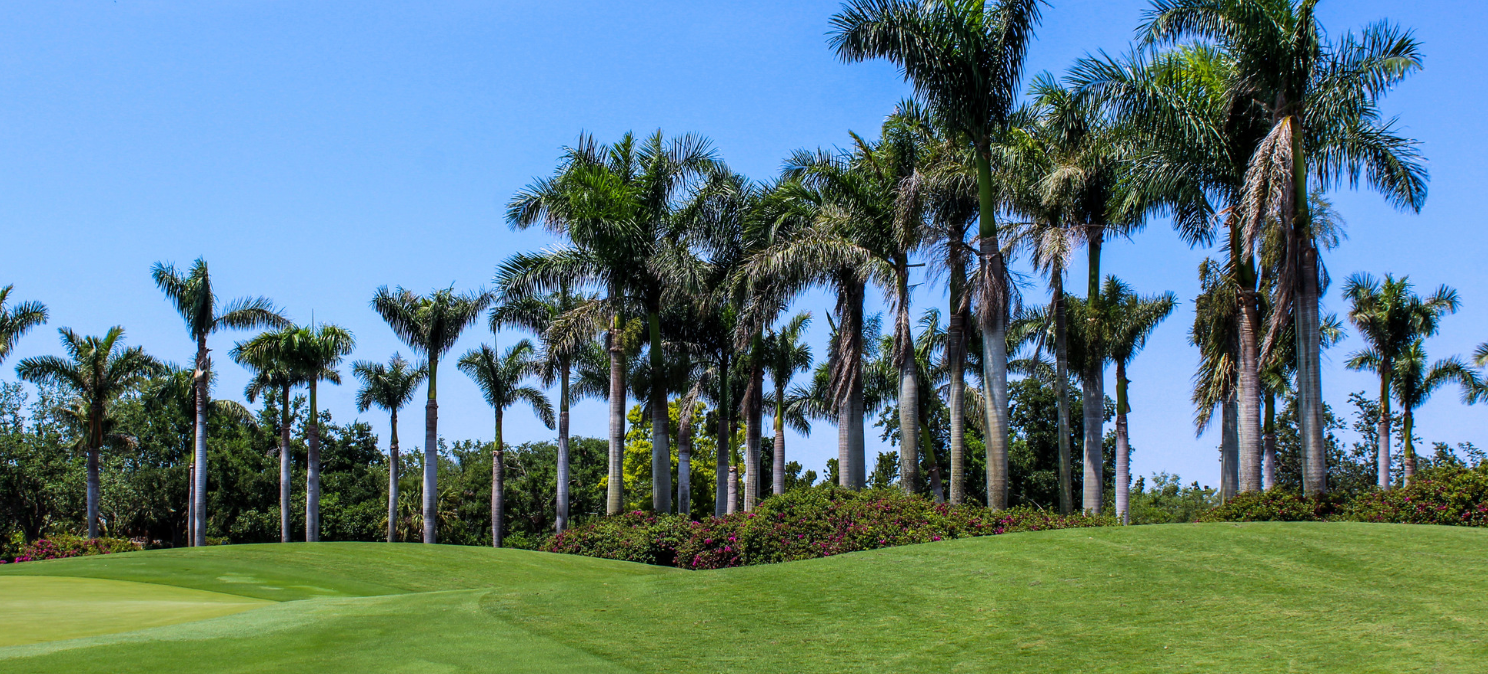
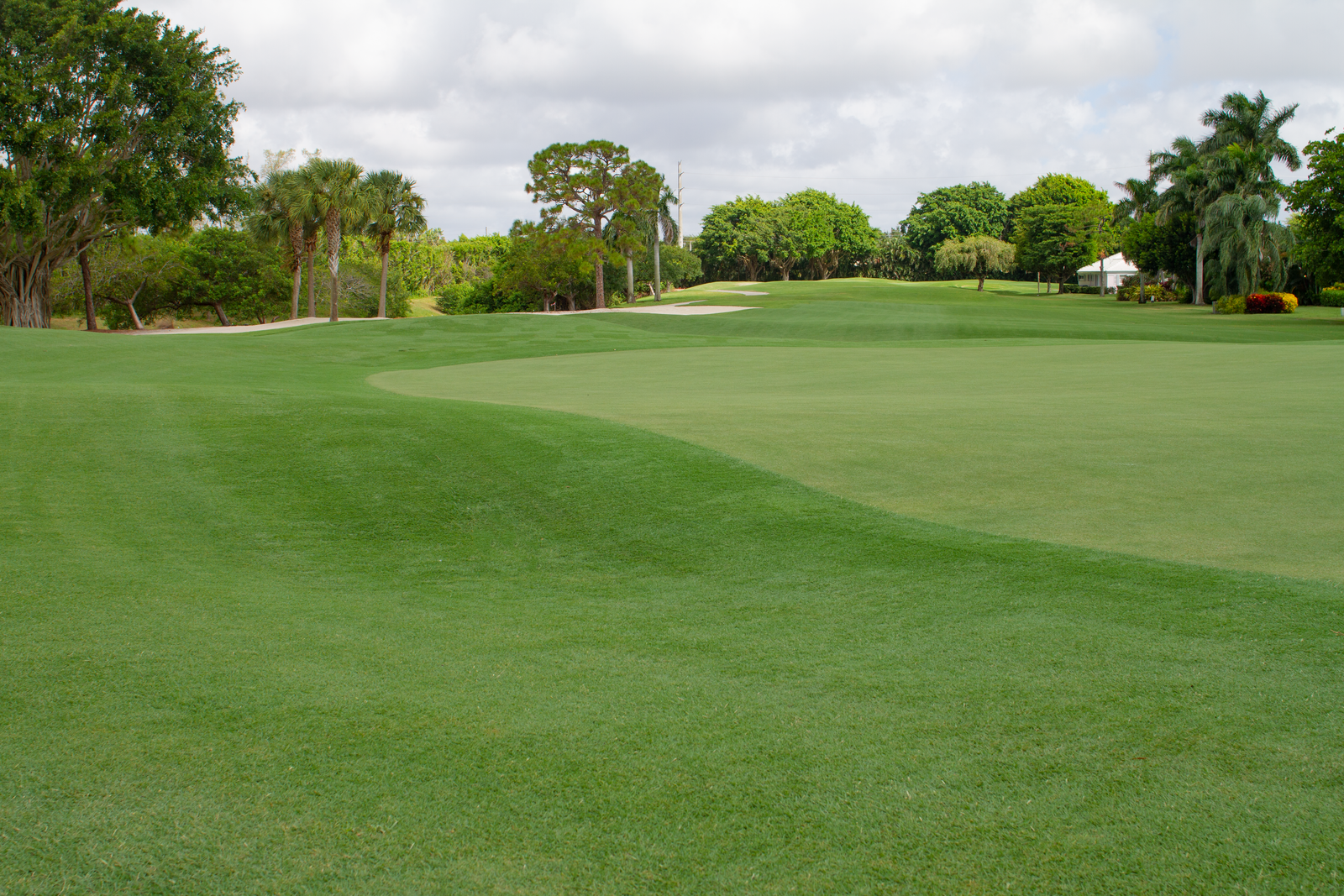
Bimini® is an improved common Bermuda that forms a fine textured, dense turf with a beautiful dark green color and upright leaf growth. Its dense, rapidly spreading growth habit and quick injury recovery make Bimini® one of the most durable turfs available.
Developed specifically for athletic applications such as golf courses, football fields, baseball fields, soccer fields and other high traffic sporting fields, Bimini® is widely used in the Southeast for commercial applications. Its soft texture offers a comfortable place for athletes to land, but also creates a suitable and enjoyable lounging area for the home lawn.
Not only does Bimini® bounce back from heavy foot traffic, but it also tolerates many strenuous weather conditions. Bimini® is quick to establish a deep root system which aids in water absorption and heat and drought tolerance. Cold temperatures are not a problem either, as it will survive frost with ease. Bimini® will even tolerate neglect and abuse, and is resistant to pests and disease. With minimal maintenance required, this is the perfect turf to lower your lawn care costs. Bimini® performs at its best in full sun with mowing heights normally associated with fairways, roughs, sports fields and lawns. In spring, you can expect the beautiful deep green color to unfurl, holding through fall. Its beauty coupled with its durable and low maintenance habit makes Bimini® one of the most desirable Bermuda varieties on the market.
What’s special about BIMINI® Bermuda?
BIMINI® Bermuda is Bethel Farm’s proprietary grass and has taken the Florida market by storm. It has quickly become the most sought-after sports turf grass. What makes BIMINI® different is its dense root system and rhizomes. These allow it to withstand traffic and hold onto a deep green color.
Best Management Practices and Information
-
Mow Height: 1-2 inches
Water: 1 inch per week (once established)
Fertilize: Mid Spring and Early Fall using a controlled-release dry fertilizer
-
Prepare the soil by loosening 4 – 6” deep, removing any debris. Level the area with topsoil and smooth with a rake.
Pre-irrigate the surface the evening before sod installation. It is essential the sod is not installed on a dry surface. Flag sprinkler heads to prevent covering the irrigation.
Lay sods just like bricks, in a stagger pattern.
Line the seams next to each other, creating no gaps. Make sure the pieces are in contact with soil as much as possible.Begin to water right away to start establishment and prevent drying out.
-
Installation Day: The ground should feel soggy as you step on it; water, water, water!
First 10-14 Days: Water multiple times a day for short intervals. Depending on the weather, 2 to 6 times a day for 4 to 6 minutes at a time.
Once Established: 1-2 inches a week. Irrigation is required as often
as it takes to avoid stress. Stress means dried out, crunchy or wilted turf.
Watering is a site-specific need and varies widely. -
At the 14-day mark, your lawn should be rooted and ready for the first mow. Be sure to check by pulling gently on the sod; do not mow if it comes up.
-
Fungicide: A contact/systemic fungicide application should
occur within 24-48 hours after installation. This will help avoid install
stress. After first application, a follow up application is recommended
according to product labels.Herbicide: Wait a minimum of 14 days after installation before applying any herbicide to any turf. Assuming you are supplying your new lawn with enough water then your grass should be rooted down 2 weeks post
install.Fertilizer: Wait 30 days to fertilize your yard, you are then able to apply a dry granular fertilizer according to the label instructions.
At just over a month old your new grass is still establishing its root system. To expedite the rooting process, apply a dry granular fertilizer, we recommend Scotts® Southern Turf Builder granular fertilizer at rates recommended on the instructions on the bag. With more roots comes better moisture and nutrient transfer throughout the plant and an overall healthier stand of grass. Establishing a new lawn is a slow process, so be patient.