ICON Zoysia
Icon Zoysia® is the world's first improved cultivar of Zoysia macrantha, a zoysia species that is known to be very vigorous, as well as more salt-tolerant and more drought-resistant that those zoysia species historically used in turfgrass breeding.
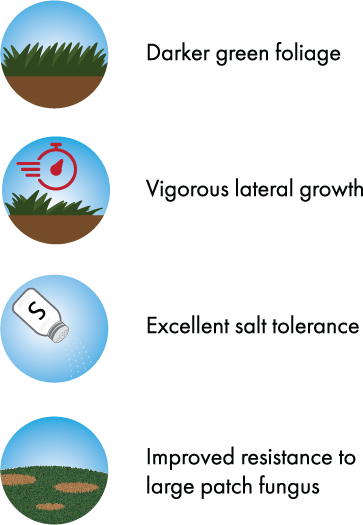
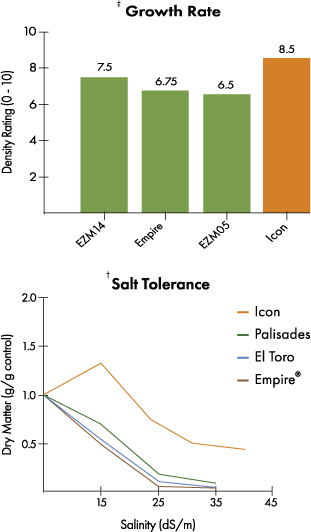
The product of a decade-long breeding program, Icon accentuates the inherit benefits of Z. macrantha while improving upon the aesthetics. The result? A thick, lush turf with a dark green color under a wide range of conditions, vigorous growth, exceptional salt tolerance, and improved resistance to large patch disease. US Patent No. PP21,789


What sets ICON Zoysia apart?
While Icon may look similar to other broad-bladed zoysia varieties, it is actually an entirely different species: Zoysia macrantha. In fact, Icon is the only improved turfgrass variety of this species on the market today. With that comes some added benefits over other similar varieties.
It is also worth noting that Zoysia macrantha has been shown to be more drought resistant than the other commercialized zoysiagrass species.
Best Management Practices and Information
-
A soil test is highly recommended to establish a base line of pH, CEC, salts and nutrient levels. Amend soils per soil test recommendations prior to laying sod. Testing can be done through your local cooperative extension.
-
For established turf, irrigate only as needed to prevent drought stress. Apply 0.5 – 0.75” per cycle. Irrigation schedules will depend on soil type, site conditions and climate and should be adjusted with the seasons.
-
2-4 lbs. of N/1000 sf./year, depending on climate; P and K application rates should be determined by soil test analysis. If desired, supplement with a micronutrient blend, high in elemental iron, to bolster turf color.
-
A 1.5-2.5” mowing height is recommended; both rotary and reel mowers may be used.
-
Monitor for billbugs and other soilborne insect pests, chinch bugs, armyworms and webworms; treat with a labeled insecticide once an action threshold is reached. Preventative fungicide applications should not be necessary but always be diligent and stay alert to possible fungal infection.
-
For weed control, apply labeled pre-emergent and selective post-emergent herbicides, as prescribed. Top dressing with sand or a compost has shown to be beneficial. Annual dethatching and aeration should not be necessary but may be beneficial.